
"Father Tian"
50 article(s) found

The History of Coffee introduction and expansion in China in the early stage (2)
1. The presentation of the respective expressions and questions of Zhu Kula Coffee 1.1 I remember that it was still the spring of 1995, when Professor Mao Genhai of the former South China Hot farming Academy and I visited Xishuangbanna, Yunnan Province. I had the honor to see the review and prospect of Yunnan coffee development published in the third issue of Tropical crop Science and Technology in 1994 by Huang Junxiong and Zhang Xingcan, Institute of Tropical and Subtropical Economic crops, Yunnan Academy of Agricultural Sciences

The respective expressions and questions of the introduction years of Zhukula Coffee in Chinese Coffee Culture
1.1 I remember that it was still the spring of 1995, when Professor Mao Genhai of the former South China Hot farming Academy and I went to Xishuangbanna, Yunnan Province. I had the honor to see Huang Junxiong and Zhang Xingcan, Institute of Tropical and Subtropical Coffee, Yunnan Academy of Agricultural Sciences, published a paper on the development of Yunnan coffee in 1994 in the third issue of Tropical crop Science and Technology, from which we got the information about the earliest introduction of Yunnan coffee.
History of Coffee planting in the early stage of Coffee introduction and expansion in China (2)
1. The presentation of the respective expressions and questions of Zhu Kula Coffee 1.1 I remember that it was still the spring of 1995, when Professor Mao Genhai of the former South China Hot farming Academy and I visited Xishuangbanna, Yunnan Province. I had the honor to see the review and prospect of Yunnan coffee development published in the third issue of Tropical crop Science and Technology in 1994 by Huang Junxiong and Zhang Xingcan, Institute of Tropical and Subtropical Economic crops, Yunnan Academy of Agricultural Sciences
The hundred-year memory of Yunnan Coffee Zhu Kula
A hundred years ago, when the French missionary Tian Deneng planted a coffee tree seedling on the land of Jukula, a small mountain village, China has been destined for coffee ever since.
The History of Coffee Culture and the Centennial memory of Yunnan Coffee
A hundred years ago, when the French missionary Tian Deneng planted a coffee tree seedling on the land of Jukula, a small mountain village, China has been destined for coffee ever since. In Binchuan County, Dali City, Yunnan Province, there is a hidden mountain village, the whole village is covered by a piece of green trees, you will find that these green trees are almost all coffee trees. Through the surrounded coffee forest, you can walk into the village.
The ancient coffee forest in China
With the unveiling of the mysterious veil of the century-old history of Chinese coffee, this unknown and isolated mysterious village has come into people's view for the first time. At the same time, Dehong Hougu Coffee Co., Ltd., the only national leading enterprise in China's coffee industry, took immediate action as soon as it was informed. Through a large number of investigations and visits, the representative of Hougu Coffee finally found the oldest in China.

Yunnan Coffee-Yunnan Coffee-Yunnan Coffee
In 892, Father Tian, a French missionary, successfully planted coffee in a place called Zhukula in Yunnan Province. Up to now, there are still 24 coffee trees growing in Zhukula Township, which are more than 90 years old. Zhukula is a mysterious, legendary and beautiful natural village. It belongs to Zhukula Village Committee of Pingchuan Town, Binchuan County, Dali Prefecture. It is located on the bank of Yupao River, a tributary of Jinsha River. It is a Dali Prefecture, Chuxiong Prefecture and Lijiang City
A brief introduction to Yunnan small Coffee the History of Yunnan small Coffee the Origin Cloud of Yunnan small Coffee
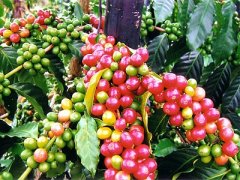
In 1892, French missionary Father Tian succeeded in growing coffee in a place called Zhukula in Yunnan. Up to now, there are still 24 coffee trees which are more than 90 years old in Zhukula Township. Zhu Kula is a mysterious, legendary and beautiful natural village, which belongs to the Zhukula Village Committee of Pingchuan Town, Binchuan County, Dali Prefecture. It is located on the banks of the Yubao River, a tributary of the Jinsha River. It is a Dali Prefecture, Chuxiong Prefecture and Lijiang.

The History and Origin Story of Yunnan Sapin Coffee. How about Sipin Coffee? is it good?
Professional coffee knowledge exchange more coffee bean information please follow the origin of coffee workshop (Wechat official account cafe_style) ● in 1892, French missionary Father Tian successfully tried to grow coffee in a place called Zhukula in Yunnan. Up to now, there are still 24 coffee trees which are more than 90 years old in Zhukula Township. Zhu Kula is a mysterious, legendary and beautiful natural village, belonging to Dali.
The Origin of Yunnan Coffee
In 1892, French missionary Father Tian succeeded in growing coffee in a place called Zhukula in Yunnan. Up to now, there are still 24 coffee trees which are more than 90 years old in Zhukula Township.

The Origin of Yunnan small Coffee
Origin: in 1892, French missionary Father Tian succeeded in growing coffee in a place called Zhukula in Yunnan. Up to now, there are still 24 coffee trees which are more than 90 years old in Zhukula Township. Zhu Kula is a mysterious, legendary and beautiful natural village, which belongs to the Zhukula Village Committee of Pingchuan Town, Binchuan County, Dali Prefecture. It is located on the banks of Yupao River, a tributary of the Jinsha River. It is a Dali Prefecture and Chuxiong.

What kind of coffee beans are the small grains produced in Yunnan, China? Can Yunnan grow tin cards and bourbon?
Professional coffee knowledge exchange more coffee bean information please follow the coffee workshop (Wechat official account cafe_style) Yunnan small-grain coffee, Rubiaceae, coffee genus, planting areas are mainly distributed in Lincang, Baoshan, Simao, Xishuangbanna, Dehong, Nujiang and other states. Small grains of coffee are native to Ethiopia or Arabian Peninsula. Fujian, Guangdong, Hainan, Guangxi, Sichuan, Guizhou and Yunnan
What kind of coffee beans are the small grains produced in Yunnan, China? Yunnan Coffee Bean Iron pickup and Alibika
Yunnan small-grain coffee, Rubiaceae, coffee genus, the planting area is mainly distributed in Lincang, Baoshan, Simao, Xishuangbanna, Dehong, Nujiang and other states. Small grains of coffee are native to Ethiopia or Arabian Peninsula. It is cultivated in Fujian, Guangdong, Hainan, Guangxi, Sichuan, Guizhou and Yunnan. The superior geographical conditions have led to the rapid development of the coffee industry in Yunnan. In 2014, no matter the planting area

Create "Zhu Kula Century Ancient Coffee"
The oldest coffee tree in China grows in Zhu Kula Village, Pingchuan Town, in the Yubao River Canyon in Binchuan County, Dali Bai Autonomous Prefecture.

The History of Coffee in Yunnan when did China begin to grow coffee beans
The History of Coffee in Yunnan when did China begin to grow coffee beans during the period of the Republic of China, the Catholic Church still sent Father Xu, Father Gu and Father Duan to Binchuan. These missionaries taught the villagers to read the Bible, set up a church primary school, and brought basketball. Although missionaries are different, they all like to drink coffee, and they continue to grow seedlings and expand the territory of coffee trees. But...
Yunnan Coffee Culture creates "Zhu Kula Ancient Coffee"
The oldest coffee tree in China grows in Zhu Kula Village, Pingchuan Town, in the Yubao River Canyon in Binchuan County, Dali Bai Autonomous Prefecture. When I came to a small hill by the Yupao River, I saw a small mountain village surrounded by a green coffee forest. This is Zhu Kula, who is regarded as a paradise on earth. Compared with the rapid changes in the outside world, the century-old house with green tiles and white walls in the village leaves spots.
Introduction to Coffee beans-- Yunnan small Coffee Origin Yunnan Coffee characteristics Cloud
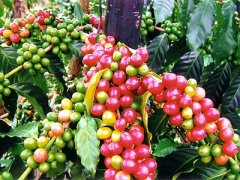
Origin: in 1892, French missionary Father Tian succeeded in growing coffee in a place called Zhukula in Yunnan. Up to now, there are still 24 coffee trees which are more than 90 years old in Zhukula Township. Zhu Kula is a mysterious, legendary and beautiful natural village, which belongs to the Zhukula Village Committee of Pingchuan Town, Binchuan County, Dali Prefecture. It is located on the banks of Yupao River, a tributary of the Jinsha River. It is a Dali Prefecture and Chuxiong.
Yunnan small grain coffee
Origin: in 1892, French missionary Father Tian succeeded in growing coffee in a place called Zhukula in Yunnan. Up to now, there are still 24 coffee trees which are more than 90 years old in Zhukula Township. Zhu Kula is a mysterious, legendary and beautiful natural village, which belongs to the Zhukula Village Committee of Pingchuan Town, Binchuan County, Dali Prefecture. It is located on the banks of Yupao River, a tributary of the Jinsha River. It is a Dali Prefecture and Chuxiong.
Coffee beans Yunnan Arabica coffee
Origin: In 1892, French missionary Father Tian tried to plant coffee successfully in a place called Zhu Kula in Yunnan Province. Up to now, there are still 24 coffee trees growing in Zhukula Township, which are more than 90 years old. Zhukula is a mysterious, legendary and beautiful natural village. It belongs to Zhukula Village Committee of Pingchuan Town, Binchuan County, Dali Prefecture. It is located on the bank of Yupao River, a tributary of Jinsha River. This is a Dali Prefecture and Chuxiong County.

What is the taste of Yunnan small-grain coffee | which Yunnan small-grain coffee tastes good and how does it taste?
Professional coffee knowledge exchange more coffee bean information please follow the coffee workshop (Wechat official account cafe_style) after 1886, a large number of British, French, American, Italian and German missionaries entered western Yunnan. In 1892, French missionary Tian Deneng came to Zhukula Village in Binchuan, Dali for missionary activities. The first coffee seed took root in Zhukula, and the Godfather Tian taught the local villagers.